You Stocked Food, Water and Batteries. Did You Plan for Being Reachable?
Most prepared households miss the one item with an expiration date measured in hours, not years: the charge in your phone. Here is why it matters more than anything in the basement.

If you are reading this, you are probably already ahead of most people. You have water stored. Canned food. Batteries. Maybe a generator, a camp stove, a stack of firewood. You have thought about this.
So here is an uncomfortable question: if the power went out tonight and stayed out for five days, on which day would you lose contact with your family?
For most well-prepared households, the honest answer is day two. Not because they forgot food or water, but because every plan they made assumed one thing they never wrote down: that their phone would keep working.
The second night is when it hits
The first night of an outage is manageable. Phones are mostly charged. People check in. Everyone assumes the power will be back by morning.
By the second night, the math catches up. Phones that started at 70% are under 20%, because they have been doing triple duty as flashlight, radio and news feed. The regular power bank is empty, and it needs an outlet. Somebody is sitting in the car in the driveway with the engine running just to charge a phone.
And then the calls start failing. Not because the network is down, but because the phone on the other end is dead. Your daughter at college cannot reach you. Your parents across town go quiet. You have three weeks of food in the basement and no idea whether the people you love are okay.
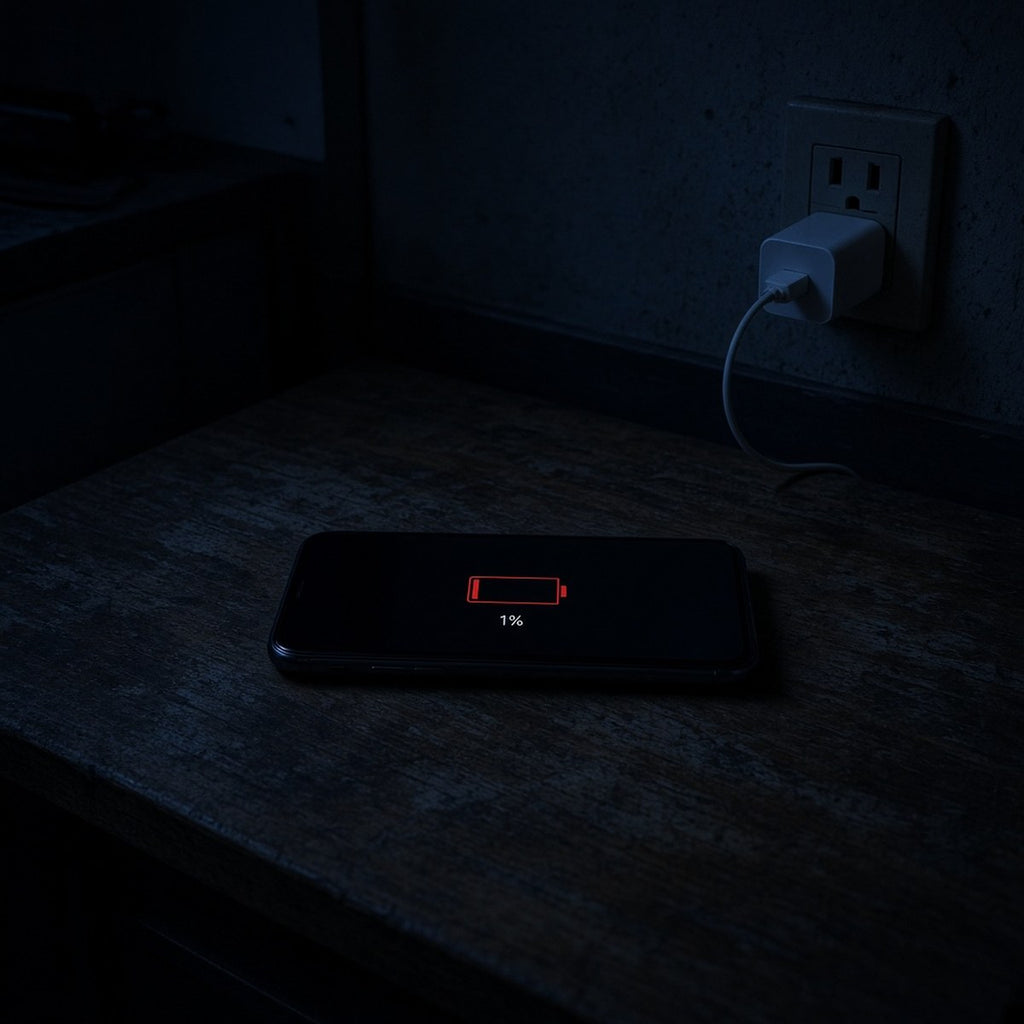
Why the backup you own probably won’t save you
Look at what most houses actually have for backup power, and ask the same question of each: when it runs out, what refills it?

- Regular power bank: one or two refills, then it needs a wall outlet.
- Car charger: needs fuel and a running engine, and never in a closed garage.
- Generator: needs fuel you may not be able to buy, must run outdoors, and is no help to your parents across town.
- Hand-crank radio-chargers: fine in theory; in practice, minutes of cranking for a sliver of charge.
Nearly every option shares the same weakness: it depends on the grid, or on fuel, to refill. When the outage lasts longer than the backup, you are back to square one.
What Rivanta actually does
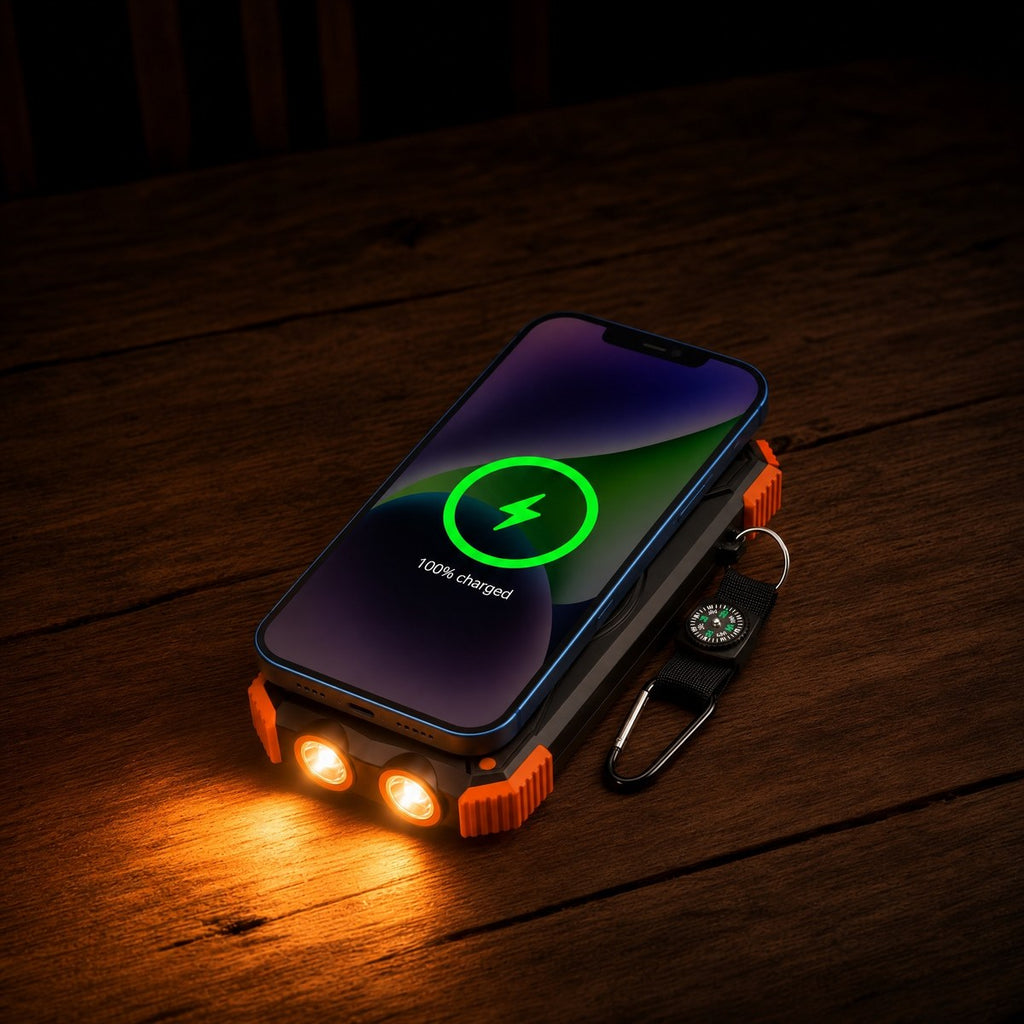
Rivanta is not a miracle device, and we will not pretend it is. It is a rugged 10,000 mAh power bank, built to sit in a drawer for months and work the day you need it. You charge it from the wall ahead of time. When the power goes out, it keeps up to three devices going at once: USB-C, USB-A and a wireless pad. It has a twin LED flashlight with SOS so you stop burning phone battery for light.
And when the outage drags on, its built-in solar panel adds charge back in direct sun. Slowly, honestly slowly. But on day four, slow is the difference between a phone that turns on and one that doesn’t.

- Buy 2, get 1 free: 3 power banks for $109.99 ($36.66 each)
- Buy 3, get 2 free: 5 power banks for $164.99 ($33.00 each)
- 90-day money-back guarantee on every order
Ships with tracking · Ends Nov 30, 11:59 PM CT
What Rivanta is, and what it isn’t

- 10,000 mAh (37 Wh): about 2 to 2.5 full charges for most iPhones and Galaxy phones
- 3 devices at once: USB-C 20W fast charge, USB-A and a Qi wireless pad
- Twin LED flashlight with steady, strobe and SOS modes, so you are not burning your phone’s battery for light
- Built-in solar panel for a slow backup top-up in direct sun when there is no outlet
- Built to be thrown in a truck: rubber corners, IPX4 splash-resistant shell, compass carabiner
- Under the 100 Wh carry-on limit for power banks (check your airline)
| Rivanta | Regular power bank | Generator | |
|---|---|---|---|
| Works with no grid | Yes | Until it runs out | While fuel lasts |
| Refills with no outlet or fuel | Solar top-up | No | No |
| Safe indoors, in your hand | Yes | Yes | Outdoors only |
| Charges 3 devices, incl. wireless | Yes | Usually 1 | With adapters |
| Built-in flashlight + SOS | Yes | No | No |
| Price | From $33 each in a bundle | $20–$40 | $400+ |
What to realistically expect
- About 2 to 2.5 full charges for most phones from a full bank
- Several days of phone use in an outage if you use Low Power Mode and keep screen time sensible
- Solar adds a slow top-up in direct sun; think of it as stretching the last charge, not replacing the wall
- Top it up every three months in storage
Put one in your drawer and one in every house you would worry about. That is the piece of the plan most prepared households are missing.
Add the missing item to your plan
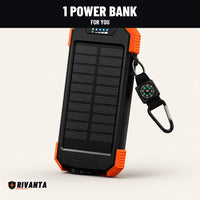 1 Power BankFor you · $54.99 each$54.99
Save 29%MOST POPULAR
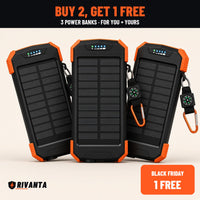 Buy 2, Get 1 FREE3 power banks · $36.66 each$109.99
Save 52%BEST VALUE
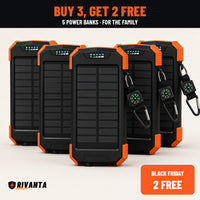 Buy 3, Get 2 FREE5 power banks · $33.00 each$164.99
Save 57%
Tap a bundle to go straight to secure checkout · Ships with tracking · 90-day money-back guarantee
Get the Black Friday bundle →90-day money-back guarantee · Black Friday pricing ends Nov 30, 11:59 PM CT
Charge it, use it, switch off your main breaker for an hour and live on it. If it is not for you, send it back within 90 days for a full refund.


